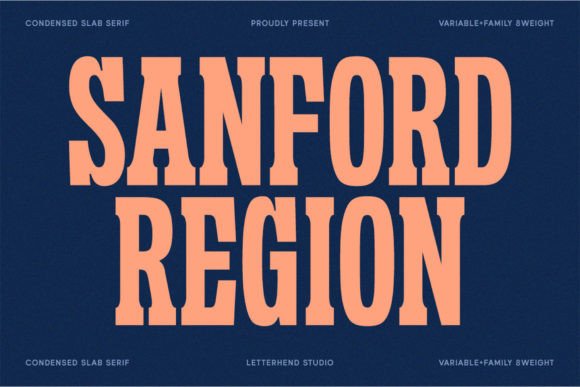
Sanford Region: A Powerful Slab Serif for Bold Branding
When you're designing a logo, a headline, or a piece of packaging, the typeface you choose carries more weight than you might think. It’s not just about legibility; it's about personality. Enter Sanford Region, a condensed slab serif typeface that commands attention without shouting. It bridges the gap between industrial utility and high-end sophistication, making it a versatile tool for anyone looking to establish a strong visual presence. If you have been searching for a font that balances modern typography with classic structure, this might be the missing piece in your design toolkit.
The Anatomy of Strength: Visual Characteristics
At its core, Sanford Region is defined by its geometry. As a condensed font, it occupies vertical space efficiently, allowing you to stack text for maximum impact in tight layouts. The "slab" element refers to the heavy, block-like serifs—the small strokes at the ends of the main letterforms. Unlike a delicate serif font that whispers elegance, Sanford Region asserts it. The stroke contrast is relatively low, meaning the thick and thin parts of the letters are somewhat uniform, creating a texture that feels sturdy and reliable.
However, don't mistake sturdy for stiff. This typeface possesses a distinct rhythm. The letters are tightly spaced (or tracked), creating a cohesive block of text that feels like a unified wall of information. This density is what makes it such an effective display font. It has the visual "heft" to anchor a design, providing a solid foundation upon which other elements—like a clean sans serif font or a fluid script font—can play off.
Where Sanford Region Shines: Practical Applications
The versatility of a premium font lies in its ability to adapt to different mediums. Sanford Region is a workhorse that transitions seamlessly from print to digital, but it truly excels in specific scenarios where impact is the primary goal.
Branding and Identity
For entrepreneurs and small business owners, brand identity is everything. Sanford Region is an excellent choice for logos that need to feel established and trustworthy. Think about industries like craft brewing, men’s grooming, automotive services, or artisanal food production. The font carries an inherent "heritage" vibe that suggests quality craftsmanship. When used for a wordmark, it creates a badge-like feel that looks great stamped on packaging or embossed on stationery.
Editorial and Publishing
In the world of publishing, hierarchy is king. Whether you are designing a magazine cover, a book jacket, or a blog header, you need a typeface that can pull the reader's eye immediately. Sanford Region is perfect for headlines and sub-headers. Its condensed nature allows you to fit more characters on a line without sacrificing size, which is a massive advantage in editorial design where space is often at a premium. Pair it with a highly readable serif or sans serif for body copy to create a dynamic contrast between the loud headline and the quiet text.
Packaging and Signage
Readability from a distance is crucial for signage and packaging design. The bold, blocky nature of Sanford Region ensures that text remains legible even when viewed from across a room or on a crowded shelf. It works beautifully on labels, invitations, and greeting cards. For wedding stationery, for example, it offers a modern alternative to traditional calligraphy, appealing to couples looking for a contemporary, minimalist aesthetic.
Strategic Typography: How This Font Influences Perception
Choosing a font is a psychological decision. The shapes of letters trigger emotional responses in your audience. When you utilize Sanford Region, you are tapping into associations of strength, stability, and professionalism.
Because it is a slab serif, it feels grounded. It suggests that the brand or message is reliable. This is particularly useful for service-based businesses or B2B companies that want to project competence. Furthermore, the condensed nature of the typeface implies efficiency and modernity. It cuts the fluff and gets straight to the point. This combination makes it a powerful asset for social media graphics where you have only a split second to capture a user's attention before they scroll past.
Enhancing Visual Hierarchy
Effective design relies on guiding the viewer's eye through the content in a specific order. Sanford Region is an aggressive tool for the top of that hierarchy. By using it for your primary message, you create a strong focal point. You can then use a lighter weight or a different font family—perhaps a clean sans serif font—for supporting details. This interplay creates a visual rhythm that keeps the viewer engaged and makes the information easier to digest.
Practical Guidance for Designers and Creators
Integrating a new typeface into your workflow requires some testing. Here is how to get the most out of Sanford Region in your next project.
Evaluating Font Pairings
Sanford Region has a lot of personality. If you pair it with another font that is equally loud or decorative, the design will become chaotic. The best approach is contrast.
- Sans Serif Pairing: Combine Sanford Region with a geometric sans serif (like Montserrat or Futura) for a clean, modern look. This works well for tech startups or fashion brands.
- Serif Pairing: Pair it with a traditional, high-contrast serif (like Garamond or Playfair Display) to bridge the gap between modern branding and classic elegance. This is ideal for luxury goods or editorial layouts.
- Script/Handwritten Pairing: Use a loose, handwritten font sparingly alongside Sanford Region to add a human touch to an otherwise industrial design. This works for wedding invitations or boutique packaging.
Readability Considerations
While Sanford Region is excellent for display purposes, exercise caution when using it for long-form body text. Its condensed width and high visual density can make reading paragraphs difficult, especially on smaller screens. It is best reserved for short bursts of text: logos, headers, pull quotes, and call-to-action buttons. For the main body of a website or a novel, stick to a font optimized for extended reading.
Licensing and Usage
Before finalizing a design for a client or your own business, always verify the licensing terms of your design assets. If you are using Sanford Region for a commercial project—such as a logo for a client, merchandise for sale, or a paid publication—ensure you have the appropriate commercial font license. Most premium fonts offer different tiers depending on the number of users or the scale of the distribution. Respecting these licenses not only keeps you legal but supports the type designers who create these tools.
Conclusion
Sanford Region is more than just a collection of letters; it is a design statement. It offers the robustness of a slab serif with the efficiency of a condensed layout. Whether you are crafting a brand identity for a new startup, laying out a dynamic magazine spread, or designing packaging that needs to pop on the shelf, this typeface provides the structure and style necessary to elevate your work. By understanding its personality and applying it strategically, you can create designs that are not only beautiful but deeply effective.