Pencil Line: A Display Font with Handcrafted Charm
Understanding the Personality of Pencil Line
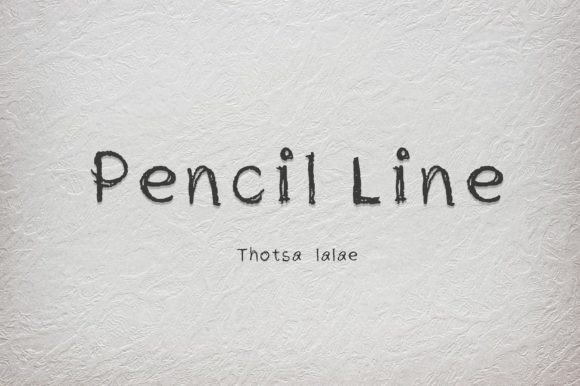
When you first encounter Pencil Line, you’re not just looking at a set of characters—you’re meeting a typeface with a distinct personality. This isn’t your standard corporate font or a sterile geometric design. Pencil Line is a display font that feels genuinely hand-drawn, capturing the spontaneous, slightly imperfect strokes of a pencil on paper. Its lines have a natural weight variation, with terminals that taper softly and edges that aren’t perfectly sharp. This gives it a warm, approachable, and slightly whimsical character that immediately sets a different tone than a sans serif font or a traditional serif font.
The appeal of a creative font like Pencil Line lies in its ability to inject humanity into a design. In a world saturated with polished, digital-perfect typeface options, this font stands out by embracing a crafted aesthetic. It communicates effort, thoughtfulness, and a touch of playfulness. It’s the kind of font that makes a viewer feel like a real person designed it, which can be a powerful tool for building connection. Whether you’re working on a personal project or a commercial brand, understanding this font’s core personality is the first step to using it effectively.
Where Pencil Line Truly Shines
The strength of a display font is in its ability to command attention in specific contexts. Pencil Line isn’t designed for long-form body text; its charm would become a distraction over hundreds of words. Instead, it excels where you need impact, personality, and a clear focal point.
For logo design and brand identity, especially for businesses that want to appear approachable, creative, or artisanal, Pencil Line can be a fantastic choice. Think of a boutique bakery, a children’s educational brand, a freelance illustrator’s portfolio, or a local craft brewery. The font’s handwritten quality instantly communicates a hands-on, authentic vibe. It works beautifully for packaging design where shelf appeal is critical—the quirky letterforms can make a product stand out and tell a story before the customer even reads the description.
In editorial design, use it for pull quotes, chapter titles in a book, or feature headings in a magazine. It draws the eye and creates a visual break from more standard text fonts. For web design, it can be a powerful tool for hero section headlines, call-to-action buttons, or special promotional banners, provided the background is clean and the text remains legible. Similarly, in social media graphics, Pencil Line can help your posts stand out in a crowded feed, adding a personal touch that feels less corporate and more conversational.
Practical Guidance for Using This Font
Choosing a premium font is an investment, so it’s wise to evaluate how it fits your specific projects. Before committing to Pencil Line, consider your audience and the message you want to convey. Its whimsical nature is perfect for projects targeting families, creatives, or brands with a strong story, but it might not align with industries that require a tone of stark seriousness or high-tech precision.
Font pairing is crucial. Because Pencil Line has such a strong character, it needs a more neutral partner to maintain readability and visual hierarchy. A clean, geometric sans serif font for body text often works well, providing a calm counterbalance to the headline’s energy. A simple, sturdy serif font can also create an elegant contrast. Avoid pairing it with other highly decorative script fonts or handwritten fonts, as this can create visual chaos and undermine your design’s professionalism.
When you license Pencil Line as a commercial font, review what’s included. Does the package offer multiple weights, alternate characters, or stylistic sets? These extras can provide valuable flexibility, allowing you to fine-tune the look for different applications—from a subtle variation in a subheading to a more pronounced display style for a logo. Always test the font at the size you intend to use it. View it on different screens and, if for print, print a sample. Check the legibility of key letters and numbers, especially in words central to your brand or message.
Ultimately, a font like Pencil Line is a design asset. Its value isn’t just in its aesthetic, but in its ability to help you communicate a specific feeling and connect with your audience on a human level. Used thoughtfully, it can elevate a project from merely functional to memorably expressive.